What Happens the First Morning After Laser Eye Surgery
A human-centered look at laser eye surgery — exploring emotional renewal, freedom from lenses, cost realities, and how technology transforms daily life. A story about clarity, not just vision.
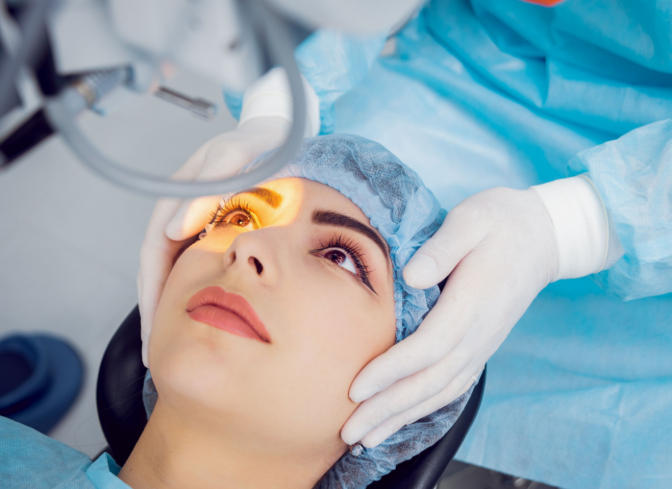
There’s a quiet moment that happens after every laser eye surgery. A patient blinks, the doctor steps back, and the world begins to shift into focus — sharper, brighter, cleaner. It’s not just about eyesight. It’s about rediscovering what it means to see.
The Modern Miracle of Clarity
In a world ruled by screens and fine details, vision is no longer a luxury — it’s survival. From navigating city traffic to reading a message at arm’s length, clear vision affects every part of modern living.
Laser eye surgery, once a futuristic idea reserved for the brave and wealthy, has become an everyday option for millions. It promises what glasses and contact lenses could never offer: true independence.
But the story of laser vision correction isn’t just medical — it’s deeply human. It’s about trust, courage, and the small but life-altering act of opening one’s eyes to a clearer tomorrow.
From Glasses to Freedom
Before lasers, vision correction meant dependency — on lenses, frames, and endless maintenance. People described a constant cycle: fogged-up lenses in winter, dry eyes from contacts in summer, or the frantic search for glasses every morning.
Laser eye surgery changed that. The procedure doesn’t simply “fix vision”; it rewires how the eye interacts with light. Using precision beams thinner than a human hair, surgeons reshape the cornea to focus light perfectly onto the retina. In less than 15 minutes, a lifetime of visual dependence can be transformed.
The Psychological Shift
What often surprises patients isn’t just what they see afterward — it’s what they feel.
Vision is intimately tied to confidence. The ability to look at someone directly, to drive at night without fear, to swim without hesitation — these moments carry profound emotional weight. Many report a sense of renewal, describing it as “seeing the world for the first time again.”
Psychologists studying post-surgery experiences note patterns of increased self-esteem and reduced anxiety. The simple act of unfiltered vision often translates into new professional and social opportunities.
Technology Meets Humanity
Behind every successful laser surgery lies decades of innovation. Modern clinics now use advanced mapping systems that create a 3D model of each cornea, allowing ultra-personalized procedures. This level of accuracy ensures minimal discomfort and near-instant recovery.
Techniques such as LASIK, PRK, and SMILE represent the evolution of surgical precision. Each serves a different need — from active athletes who prefer no corneal flap (SMILE) to those with thinner corneas who choose PRK. What unites them all is one goal: helping the eye refocus light as nature intended.
Why People Choose It
When asked why they finally decided to undergo surgery, most patients don’t talk about science. They talk about moments.
A traveler tired of carrying extra lenses. A parent who wants to see their child’s face clearly in the pool. A photographer realizing their passion deserves unaided vision.
These aren’t statistics — they’re reminders of how deeply sight defines human experience.
The Cost of Clarity
Laser eye surgery isn’t inexpensive, but for many, it’s a long-term investment in both vision and quality of life. Prices vary depending on the method and location, generally ranging between $2,000 and $4,000 per eye across North America and Europe.
What’s often overlooked is the lifetime cost of alternatives — prescription changes, replacement lenses, cleaning solutions, and frames. Over 20 years, that amount easily exceeds the cost of surgery.
Financially and practically, laser surgery often ends up the more sustainable choice.
The Myths That Still Remain
Despite its growing popularity, myths persist. Some fear that vision fades over time or that recovery is painful. In reality, vision remains stable for decades in most cases, and discomfort is minimal — usually limited to mild dryness or temporary glare at night.
Others believe laser eye surgery is only for the young, but people well into their 50s and even 60s are often suitable candidates. The key factor is not age, but eye health and prescription stability.
What Happens After
The hours following surgery are a test of patience. Eyes may water, light may feel too bright, and time seems to stretch endlessly. Then suddenly, clarity arrives — not in a dramatic flash, but as a quiet realization that the world no longer needs a lens to be beautiful.
The first morning after is often described as surreal. Colors feel more vivid, distances more real. For those who’ve worn glasses since childhood, it can feel like waking up inside a dream — except it’s the real world, finally visible.
Long-Term Impact
Years after the procedure, most patients describe not just better sight, but a deeper awareness of how vision shapes their lifestyle. No more lens fog during winter runs. No more panic over broken frames. Instead, they describe simplicity — a rediscovered ease that’s hard to measure but impossible to ignore.
And while presbyopia (age-related near vision decline) still comes with time, the clarity gained through laser correction often lasts a lifetime.
A Look Toward the Future
The next chapter in vision correction is already unfolding. Emerging procedures like wavefront-guided LASIK and customized SMILE use artificial intelligence to predict and adapt to each eye’s microscopic imperfections. The goal? Perfect visual outcomes tailored not just to eyesight, but to lifestyle — whether that’s long nights at a computer or bright days under the sun.
Soon, vision correction may become as personalized as a fingerprint.
The Human Element
Laser eye surgery, at its core, is not about vanity or luxury. It’s about reclaiming something quietly stolen by biology — the ability to see without barriers. Every successful surgery is a reminder of human resilience: the desire not only to see, but to live fully seen.
When patients leave the clinic and step into daylight, the look in their eyes tells a universal story. Not of medicine or science — but of awe. Because no matter how advanced the technology becomes, nothing compares to that first unfiltered sunrise.